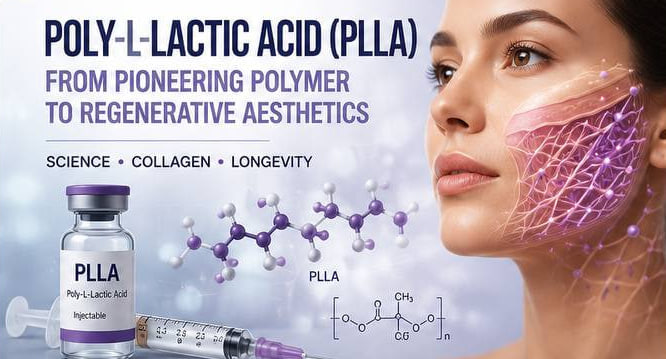
A comprehensive scientific review of the history, development, mechanism of action, and clinical evolution of Poly-L-Lactic Acid (PLLA).
Why Was PLLA Created?
Before Poly-L-Lactic Acid (PLLA) was ever considered for aesthetic medicine, medicine itself was facing a major challenge: the lack of implantable materials that could provide structural support and then safely disappear after healing.
For decades, surgeons relied on permanent materials such as stainless steel, silk sutures, and non-degradable polymers. Although these materials offered mechanical strength, they frequently caused long-term foreign body reactions, chronic inflammation, infection, and often required additional surgery for removal.
Researchers around the world began searching for a material that could temporarily support tissues, gradually degrade inside the body, and finally be eliminated through natural metabolic pathways without leaving harmful residues.
This scientific need eventually led to the development of biodegradable polymers, opening a completely new chapter in biomaterials research.
Today, PLLA represents one of the greatest achievements of this movement, although its original purpose had absolutely nothing to do with facial rejuvenation or collagen stimulation.
The Medical Challenges Before PLLA
Before the invention of Poly-L-Lactic Acid (PLLA), surgeons and biomedical engineers faced a significant challenge: finding materials that could provide temporary structural support while allowing the body to heal naturally.
Throughout much of the twentieth century, permanent materials such as stainless steel wires, silk sutures, polypropylene, and other non-degradable polymers were widely used in surgery. Although these materials were effective in maintaining tissue approximation and mechanical stability, they were associated with several long-term complications.
Permanent implants could trigger chronic inflammation, foreign body reactions, persistent infection, fibrosis, and patient discomfort. In many cases, an additional surgical procedure was required to remove the implanted material after healing, increasing both healthcare costs and patient morbidity.
These limitations motivated scientists to search for a new generation of biomaterials capable of maintaining their mechanical properties during the critical healing period while gradually degrading into non-toxic metabolites that could be naturally eliminated from the human body.
This research eventually led to the development of biodegradable polymers, a milestone that transformed modern surgery and regenerative medicine.
The Limitations of Permanent Surgical Materials
The shortcomings of permanent surgical materials extended beyond the need for removal surgery. Long-term implantation often increased the risk of bacterial colonization, chronic irritation, implant migration, and prolonged immune responses.
Moreover, permanent materials remained inside the body long after their mechanical function had ended. From a biological perspective, this contradicted the natural process of tissue healing, where temporary support is needed only during regeneration.
The ideal biomaterial would therefore provide sufficient strength during healing, gradually lose its mechanical integrity as new tissue formed, and finally disappear without causing toxicity or long-term inflammation.
This concept became the foundation for decades of research into biodegradable polymers.
The Birth of Biodegradable Polymers
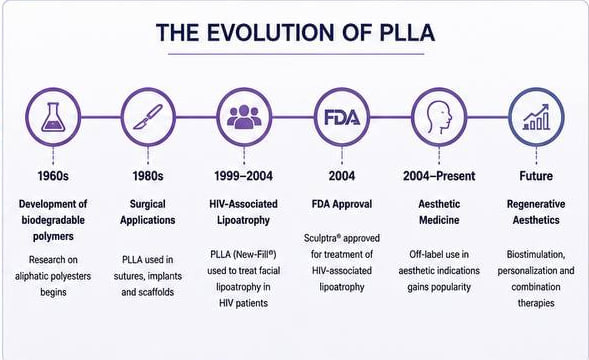
The search for biodegradable biomaterials began in the mid-twentieth century, when advances in polymer chemistry opened new possibilities for medical innovation. Scientists envisioned synthetic materials that could temporarily support healing tissues and then gradually degrade into harmless by-products, eliminating the need for surgical removal.
Among the earliest biodegradable polymers investigated were polyglycolic acid (PGA) and polylactic acid (PLA). These materials demonstrated an exceptional combination of mechanical strength, biocompatibility, and controlled degradation, making them attractive candidates for a wide range of medical applications.
Unlike permanent implants, biodegradable polymers were designed to perform a temporary function. Once tissue healing was complete, the polymer chains gradually broke down through hydrolysis into smaller molecules that could be metabolized and safely eliminated by the body.
This revolutionary concept transformed the field of biomaterials. Instead of leaving a permanent foreign object inside the patient, surgeons could now rely on materials that naturally disappeared after fulfilling their purpose.
The development of biodegradable polymers not only improved patient safety but also laid the scientific foundation for regenerative medicine, tissue engineering, and eventually collagen biostimulation technologies such as Poly-L-Lactic Acid (PLLA).
Why Biodegradable Polymers Changed Modern Medicine
The introduction of biodegradable polymers represented a paradigm shift in medicine.
Rather than simply replacing damaged tissues with permanent materials, physicians and biomedical engineers began designing biomaterials that actively supported the body’s natural healing process.
This philosophy significantly reduced the need for secondary surgeries, lowered the risk of chronic foreign body reactions, and improved long-term patient outcomes.
Today, biodegradable polymers are used in absorbable sutures, orthopedic fixation devices, cardiovascular implants, drug delivery systems, tissue engineering scaffolds, and regenerative aesthetic medicine.
PLLA is one of the most successful examples of this scientific evolution.
The Birth of Poly-L-Lactic Acid (PLLA)
Poly-L-Lactic Acid (PLLA) originated from decades of research into biodegradable polymers and biomaterials. Rather than being developed specifically for aesthetic medicine, PLLA was initially designed as a medical-grade biomaterial capable of providing temporary structural support while safely degrading within the human body.
PLLA belongs to the family of polylactic acids (PLA), synthetic polymers derived from lactic acid monomers. Because lactic acid exists in different stereoisomeric forms, scientists discovered that each form possessed distinct physical and biological properties. Among them, the L-isomer demonstrated superior crystallinity, mechanical strength, and a slower degradation profile, making it particularly suitable for long-term medical applications.
These characteristics led researchers to develop Poly-L-Lactic Acid, a highly purified polymer with excellent biocompatibility and predictable biodegradation. Unlike permanent implants, PLLA was engineered to maintain structural integrity during tissue healing before gradually breaking down into lactic acid, which is ultimately metabolized into carbon dioxide and water through normal physiological pathways.
At the time of its development, no one anticipated that PLLA would eventually become one of the most influential collagen biostimulators in aesthetic medicine. Its original purpose was simply to solve a surgical challenge by providing temporary support without leaving permanent foreign material inside the body.
Understanding the “L” in PLLA
The letter “L” in Poly-L-Lactic Acid refers to the molecular configuration of lactic acid used during polymer synthesis.
Lactic acid exists in two mirror-image forms: L-lactic acid and D-lactic acid. Although chemically similar, these stereoisomers behave differently in biological systems.
PLLA is produced exclusively from L-lactic acid, the naturally occurring form that is readily recognized and metabolized by the human body. This molecular configuration contributes to its excellent biocompatibility, controlled degradation, and favorable safety profile.
The stereochemical purity of PLLA also influences its crystallinity and degradation rate, allowing the material to remain in tissues long enough to stimulate collagen production before being completely resorbed.
A Material Designed for Healing, Not Filling
One of the most important concepts to understand is that PLLA was never designed as a conventional dermal filler.
Its primary purpose was to act as a temporary scaffold that supports tissue healing while gradually disappearing from the body. Only years later did clinicians recognize that the biological response triggered by PLLA could be harnessed to stimulate collagen production and improve tissue quality.
This unexpected discovery transformed PLLA from a surgical biomaterial into one of the pioneering collagen biostimulators used in regenerative aesthetic medicine today.
Early Medical Applications of PLLA
Long before Poly-L-Lactic Acid (PLLA) became recognized as a collagen biostimulator, it had already established an important role in several medical specialties. Its unique combination of biocompatibility, biodegradability, and mechanical strength made it an ideal material for applications requiring temporary support during tissue healing.
Unlike permanent synthetic materials, PLLA could maintain structural integrity during the critical phases of recovery while gradually degrading as natural tissue regenerated. This characteristic significantly reduced the need for secondary surgical procedures and minimized the long-term risks associated with permanent implants.
As clinical experience expanded, PLLA gained acceptance across multiple disciplines, including general surgery, orthopedics, maxillofacial surgery, and tissue engineering. These early applications provided decades of safety data that later supported its introduction into regenerative aesthetic medicine.
The successful use of PLLA in these fields demonstrated that biodegradable biomaterials could effectively replace many permanent medical devices without compromising patient outcomes.
Absorbable Sutures
One of the earliest and most widespread applications of biodegradable polymers was the development of absorbable surgical sutures.
Traditional non-absorbable sutures often required removal or remained permanently within the body, potentially causing chronic irritation or foreign body reactions.
Biodegradable polymers, including members of the polylactic acid family, offered an alternative solution by providing sufficient tensile strength during wound healing before gradually being absorbed through natural metabolic processes.
Although modern absorbable sutures are manufactured using several different biodegradable polymers, the success of these materials demonstrated the clinical value of controlled biodegradation and significantly influenced the future development of PLLA-based medical devices.
Orthopedic Implants
PLLA was later incorporated into orthopedic fixation systems, including pins, screws, anchors, and fixation devices used to stabilize fractured bones and soft tissues.
These implants provided temporary mechanical support during bone healing and gradually degraded as biological remodeling progressed.
Compared with metallic implants, biodegradable fixation devices reduced the need for implant removal surgery while minimizing long-term complications related to permanent foreign materials.
Their successful clinical performance further strengthened confidence in biodegradable polymer technology.
Maxillofacial Surgery
In craniofacial and maxillofacial surgery, PLLA-based fixation systems became valuable tools for stabilizing facial bones following trauma or reconstructive procedures.
Because facial skeletal structures often require precise anatomical healing, biodegradable fixation devices offered sufficient stability during recovery while avoiding the long-term presence of metallic hardware.
This represented an important advancement, particularly for younger patients whose facial bones continued to grow after surgery.
Tissue Engineering
Perhaps one of the most influential medical applications of PLLA was its use in tissue engineering.
Researchers discovered that PLLA could function as a biodegradable scaffold capable of supporting cell attachment, proliferation, and extracellular matrix formation.
Instead of acting merely as an implant, PLLA became a temporary framework that guided tissue regeneration before gradually disappearing.
This concept later became one of the scientific foundations of regenerative medicine and ultimately inspired the development of collagen biostimulation therapies used in aesthetic medicine today.
The Discovery of Collagen Stimulation
For many years, Poly-L-Lactic Acid (PLLA) was regarded solely as a biodegradable biomaterial used in surgery and tissue repair. Its role was mechanical rather than biological, providing temporary support while gradually degrading within the body.
However, clinicians began to observe an unexpected phenomenon during long-term patient follow-up. Even after PLLA had been completely resorbed, treated tissues often demonstrated improved thickness, firmness, and structural integrity. These changes could not be explained by the physical presence of the material itself.
This observation prompted researchers to investigate the biological response surrounding PLLA microspheres. Histological studies revealed that the improvement resulted from the body’s own regenerative processes rather than from volume replacement.
Instead of acting as a conventional filler, PLLA initiated a controlled biological cascade that stimulated collagen synthesis over time. This discovery fundamentally changed the understanding of PLLA and marked the beginning of a new category of injectable biomaterials known as collagen biostimulators.
The Biological Response to PLLA
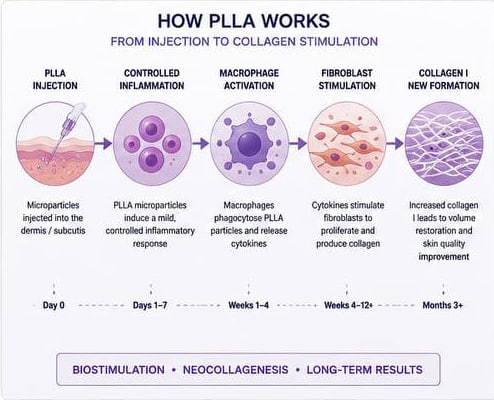
Following injection, PLLA microspheres are recognized by the body as biodegradable foreign materials. Rather than provoking an aggressive inflammatory reaction, they induce a mild and highly controlled foreign body response.
This physiological response recruits macrophages and other immune cells that interact with the microspheres. These cells release signaling molecules, including cytokines and growth factors, which activate local fibroblasts.
Once activated, fibroblasts begin synthesizing new extracellular matrix components, particularly Type I collagen, the primary structural protein responsible for skin strength and firmness.
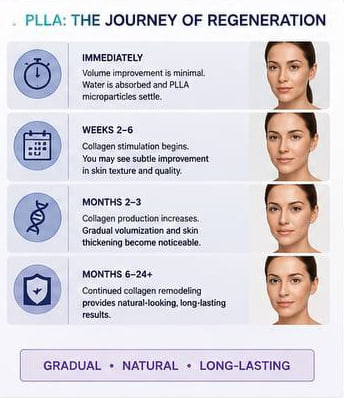
This process occurs gradually over several weeks and months, explaining why clinical improvements become progressively more visible rather than appearing immediately after treatment.
From Volume Replacement to Tissue Regeneration
The discovery of PLLA-induced collagen production represented a paradigm shift in aesthetic medicine.
Traditional dermal fillers primarily restore lost volume by physically occupying space within the tissue. Their clinical effect depends largely on the continued presence of the injected material.
PLLA follows an entirely different biological principle.
Instead of replacing volume directly, PLLA encourages the patient’s own tissues to rebuild structural support through endogenous collagen synthesis.
As a result, improvements in skin quality, elasticity, firmness, and facial contour develop naturally over time, reflecting true tissue regeneration rather than simple material implantation.
This distinction established PLLA as one of the first injectable collagen biostimulators and laid the foundation for modern regenerative aesthetic medicine.
MD Academy AI Clinical Insight
The greatest innovation of PLLA was not the material itself, but the discovery that a biodegradable polymer could stimulate the body’s own regenerative capacity rather than simply replacing lost volume.
From HIV-Associated Lipoatrophy to Aesthetic Medicine
The transition of Poly-L-Lactic Acid (PLLA) from a surgical biomaterial to an injectable collagen biostimulator did not begin in cosmetic medicine. Instead, it emerged from an urgent clinical need to improve the quality of life of patients living with HIV.
During the late 1990s and early 2000s, the widespread use of highly active antiretroviral therapy (HAART) dramatically improved survival among people living with HIV. However, many patients developed HIV-associated facial lipoatrophy, a condition characterized by progressive loss of facial fat, particularly in the temples, cheeks, and periorbital region.
Beyond its physical manifestations, facial lipoatrophy carried profound psychological and social consequences. The visible loss of facial volume often revealed a patient’s medical condition, leading to stigma, reduced self-esteem, and diminished quality of life.
Clinicians sought a treatment capable of restoring facial volume while maintaining a natural appearance over an extended period. Traditional fillers provided only temporary correction and often required frequent retreatment.
PLLA offered a fundamentally different solution.
Rather than simply replacing lost volume, PLLA gradually stimulated the patient’s own collagen production, allowing facial contours to improve progressively and naturally over several months.
Clinical studies demonstrated significant improvements in facial volume restoration, patient satisfaction, and long-term durability, establishing PLLA as one of the first injectable collagen biostimulators approved for the treatment of HIV-associated facial lipoatrophy.
This milestone marked the beginning of a new era in regenerative injectable therapies.
Regulatory Approval and Clinical Recognition
The clinical success of PLLA in treating HIV-associated facial lipoatrophy attracted worldwide medical attention.
Following extensive clinical evaluation, regulatory authorities recognized both its safety and effectiveness for facial volume restoration.
These approvals represented more than the authorization of a new injectable product; they validated an entirely new therapeutic concept based on biological tissue regeneration rather than immediate volume replacement.
As physicians gained experience with PLLA, they observed that its regenerative effects extended beyond HIV-associated lipoatrophy. Healthy individuals experiencing age-related facial volume loss also demonstrated progressive improvements in skin quality, firmness, and facial support.
These observations ultimately paved the way for the expansion of PLLA into aesthetic medicine, where it remains one of the most widely studied collagen biostimulators available today.
🧠 MD Academy AI Clinical Insight
The introduction of PLLA for HIV-associated facial lipoatrophy was a turning point in aesthetic medicine. It demonstrated that stimulating the body’s own collagen production could achieve long-lasting facial rejuvenation without relying solely on volumizing fillers.
How PLLA Stimulates Collagen Production
The clinical effects of Poly-L-Lactic Acid (PLLA) are fundamentally different from those of conventional dermal fillers. Rather than providing immediate volume through the physical presence of an injected substance, PLLA works by activating the body’s natural wound-healing and tissue remodeling mechanisms.
Following injection into the deep dermis or subcutaneous tissue, PLLA microspheres remain suspended within the extracellular matrix. These biodegradable particles serve as temporary biological stimuli, initiating a controlled and localized foreign body response without causing significant tissue damage.
Unlike acute inflammation associated with infection or trauma, this response is mild, self-limiting, and highly regulated. It creates an environment that encourages tissue regeneration instead of fibrosis or chronic inflammation.
Over time, this biological cascade stimulates fibroblast activity, promotes extracellular matrix remodeling, and gradually restores dermal structure through the production of new collagen.
The regenerative process unfolds over several weeks and months, explaining why PLLA produces progressive and natural-looking improvements rather than immediate cosmetic changes.
Phase 1: Controlled Foreign Body Response
Immediately after injection, PLLA microspheres are recognized as biodegradable foreign materials by the innate immune system.
This recognition triggers a carefully regulated foreign body response characterized by the recruitment of macrophages and other inflammatory cells.
Unlike pathological inflammation, this physiological reaction is essential for initiating tissue repair. The response remains localized and controlled, creating an environment that supports regeneration rather than tissue destruction.
As the microspheres gradually undergo hydrolysis, they continue to provide sustained biological stimulation throughout the degradation process.
Phase 2: Macrophage Activation
Macrophages play a central role in the biological mechanism of PLLA.
After surrounding the microspheres, activated macrophages release a variety of cytokines, chemokines, and growth factors that coordinate tissue repair.
These signaling molecules recruit additional reparative cells while simultaneously activating resident fibroblasts within the dermis.
Rather than functioning as destructive inflammatory cells, macrophages adopt a regenerative phenotype that promotes extracellular matrix remodeling and collagen synthesis.
Their activity represents one of the key biological links between PLLA implantation and long-term tissue regeneration.
Phase 3: Fibroblast Stimulation
Fibroblasts are the principal collagen-producing cells of connective tissue.
Under the influence of growth factors released during the foreign body response, fibroblasts become metabolically active and begin synthesizing new extracellular matrix proteins.
This process includes the production of collagen fibers, elastin-associated components, glycosaminoglycans, and other structural molecules that improve dermal architecture.
Because PLLA stimulates the patient’s own fibroblasts rather than supplying exogenous volume, the resulting tissue appears more natural and integrates seamlessly with surrounding structures.
Phase 4: Collagen Remodeling
The newly synthesized collagen initially consists of immature fibers that gradually undergo remodeling and maturation.
Over several months, collagen fibers become increasingly organized, improving dermal strength, elasticity, and structural support.
Clinical studies have demonstrated that Type I collagen becomes the predominant collagen subtype following PLLA treatment, contributing to long-lasting improvements in skin quality and facial contour.
As PLLA microspheres continue to degrade, the newly formed collagen matrix remains, providing sustained clinical benefits long after the polymer itself has been completely metabolized.
🧠 MD Academy AI Clinical Insight
PLLA does not restore facial volume by occupying space. Instead, it provides a biological stimulus that encourages the body to rebuild its own structural support through progressive collagen regeneration.
🔬 MD Academy AI Scientific Note
The long-term clinical efficacy of PLLA depends on the host’s biological response rather than the persistence of the implanted material. Once degradation is complete, the regenerated collagen network remains responsible for maintaining tissue support.
Why Do PLLA Results Last So Long?
One of the most remarkable characteristics of Poly-L-Lactic Acid (PLLA) is the longevity of its clinical results. Unlike conventional dermal fillers that rely on the physical presence of an implanted material, PLLA produces long-lasting improvements through biological tissue regeneration.
This distinction is fundamental to understanding why the effects of PLLA can persist long after the microspheres themselves have been completely degraded and eliminated from the body.
Rather than acting as a permanent implant, PLLA serves as a temporary stimulus that initiates a prolonged regenerative response. The newly formed collagen matrix becomes the primary source of structural support, replacing the role initially played by the injected material.
As a result, clinical improvements are maintained by the patient’s own tissue rather than by the continued presence of PLLA.
The Difference Between Material Persistence and Biological Persistence
Many injectable treatments maintain their effect only as long as the injected substance remains within the tissue.
PLLA follows a fundamentally different biological model.
Although PLLA microspheres gradually degrade through hydrolysis and are eventually metabolized into carbon dioxide and water, the collagen network generated during the regeneration process remains within the tissue.
This phenomenon is known as biological persistence.
In other words, the clinical outcome outlasts the implanted material because the treatment stimulates the body to create its own structural support system.
This concept represents one of the defining advantages of regenerative medicine.
Continuous Collagen Remodeling
Collagen is not a static structure.
The extracellular matrix continuously undergoes remodeling throughout life as old collagen fibers are degraded and replaced by newly synthesized fibers.
PLLA enhances this natural process by stimulating fibroblast activity and increasing collagen production over an extended period.
As collagen fibers mature and reorganize, they create a stronger and more resilient dermal framework capable of maintaining tissue support and improving skin quality.
This gradual maturation process contributes significantly to the durability of clinical outcomes.
Factors Influencing Treatment Longevity
Although PLLA is known for its long-lasting results, treatment longevity varies among individuals.
Several factors influence the duration of clinical improvement, including:
Patient age
Baseline collagen production
Metabolic activity
Lifestyle factors
Smoking status
Sun exposure
Treatment protocol
Injection technique
Number of treatment sessions
Patients with healthier lifestyles and better intrinsic regenerative capacity often experience longer-lasting outcomes.
Long-Term Clinical Evidence
Multiple clinical studies have demonstrated that improvements achieved with PLLA may persist for two years or longer in appropriately selected patients.
These long-term outcomes support the concept that PLLA functions as a regenerative therapy rather than a traditional volumizing agent.
The durability of results has contributed significantly to its growing popularity in both reconstructive and aesthetic medicine.
While individual outcomes vary, PLLA remains one of the longest-lasting collagen biostimulators currently available.
🧠 MD Academy AI Clinical Insight
The longevity of PLLA does not come from the persistence of the product itself. It comes from the persistence of the collagen that the body creates in response to treatment.
🔬 MD Academy AI Scientific Note
PLLA microspheres are temporary. The regenerated extracellular matrix is not. This distinction explains why clinical improvements may remain visible long after the polymer has been completely metabolized.
⚠️ MD Academy AI Clinical Pearl
Patients should understand that PLLA is a regenerative treatment, not an instant filler. The gradual onset of results is directly related to the time required for collagen synthesis, maturation, and remodeling.
PLLA Today
Over the past two decades, Poly-L-Lactic Acid (PLLA) has evolved from a biodegradable surgical polymer into one of the most extensively studied collagen biostimulators in regenerative aesthetic medicine.
Today, PLLA is widely used by dermatologists, plastic surgeons, maxillofacial surgeons, and aesthetic physicians around the world for the treatment of age-related volume loss, skin laxity, and structural tissue deficiency.
Unlike traditional dermal fillers that provide immediate volume replacement, PLLA has established a unique position by promoting gradual tissue regeneration through endogenous collagen synthesis.
Its ability to improve skin quality while simultaneously restoring facial support has made PLLA an essential component of modern regenerative treatment strategies.
As scientific understanding of tissue regeneration continues to expand, PLLA is increasingly viewed not simply as an injectable product but as a biological tool capable of activating the body’s own repair mechanisms.
Current Clinical Applications
Modern clinical applications of PLLA extend far beyond facial volume restoration.
Current evidence supports its use in several anatomical regions and therapeutic indications, including:
• Midface volume restoration
• Temple rejuvenation
• Jawline contour enhancement
• Chin support
• Skin laxity improvement
• Neck rejuvenation
• Décolletage rejuvenation
• Buttock augmentation
• Body contour correction
• Treatment of atrophic scars
• HIV-associated facial lipoatrophy
• Collagen regeneration following age-related tissue loss
The expanding range of indications reflects the versatility of PLLA as a regenerative biomaterial rather than a conventional volumizing agent.
Advantages of PLLA
Several characteristics distinguish PLLA from conventional injectable treatments.
Among its most important advantages are:
• Progressive and natural-looking results
• Long-lasting clinical outcomes
• Stimulation of endogenous Type I collagen
• Improvement in overall skin quality
• Restoration of structural tissue support
• High biocompatibility
• Complete biodegradation
• Excellent long-term safety profile when used appropriately
These features have positioned PLLA as one of the leading collagen biostimulators in contemporary aesthetic medicine.
Limitations and Considerations
Despite its many advantages, PLLA is not suitable for every patient or every clinical situation.
Successful treatment requires careful patient selection, appropriate product preparation, correct injection technique, and a thorough understanding of facial anatomy.
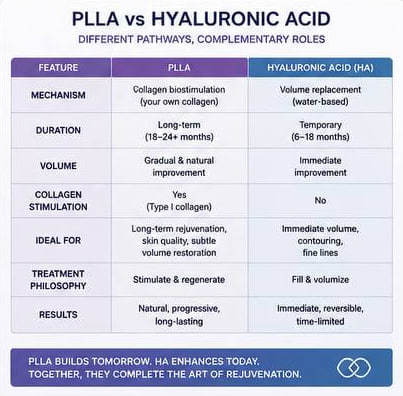
Unlike hyaluronic acid fillers, PLLA does not provide immediate correction.
Patients must understand that visible improvements develop gradually over several weeks or months as collagen remodeling progresses.
Furthermore, improper dilution, inadequate product reconstitution, superficial injection, or insufficient post-treatment massage may increase the risk of adverse events, including papules or nodules.
Appropriate practitioner training remains one of the most important determinants of treatment success.
The Expanding Role of Regenerative Aesthetic Medicine
The philosophy of aesthetic medicine is gradually shifting from simple volume replacement toward biological tissue regeneration.
Patients increasingly seek treatments that improve skin quality, restore structural integrity, and stimulate natural healing processes rather than producing immediate but temporary cosmetic changes.
Within this evolving field, PLLA represents one of the earliest and most successful examples of regenerative injectable therapy.
Its clinical success has inspired the development of additional collagen biostimulators and continues to influence the future direction of aesthetic medicine.
🧠 MD Academy AI Clinical Insight
PLLA represents a shift in aesthetic medicine from replacing lost volume to rebuilding healthy tissue through controlled biological regeneration.
🔬 MD Academy AI Scientific Note
The future of injectable medicine lies not only in filling tissue defects but in understanding and modulating the biological processes responsible for tissue aging and regeneration. PLLA has become one of the landmark materials supporting this transition.
⚠️ MD Academy AI Clinical Pearl
The success of PLLA depends as much on clinical expertise as on the product itself. Proper patient selection, accurate reconstitution, correct injection depth, and appropriate aftercare are essential for predictable outcomes.
Future Perspectives
The evolution of Poly-L-Lactic Acid (PLLA) reflects a broader transformation occurring throughout modern medicine.
For decades, medical treatments primarily focused on replacing damaged tissues, restoring lost volume, or correcting structural defects. Today, however, regenerative medicine aims to activate the body’s intrinsic capacity for repair rather than relying solely on implanted materials.
PLLA has become one of the landmark examples of this transition.
By stimulating endogenous collagen production instead of functioning as a permanent implant, PLLA has demonstrated that biological regeneration can provide predictable and durable clinical outcomes.
As scientific understanding of extracellular matrix biology, fibroblast signaling, and tissue remodeling continues to expand, new treatment strategies are expected to build upon the same regenerative principles established by PLLA.
Future developments will likely emphasize individualized treatment planning, optimized injection protocols, advanced biomaterials, and combination therapies designed to maximize natural tissue regeneration while minimizing recovery time and adverse events.
Rather than replacing traditional aesthetic procedures, regenerative therapies are expected to complement them, creating more comprehensive and biologically driven treatment strategies.
Emerging Research
Current research continues to explore new applications for PLLA beyond conventional facial rejuvenation.
Investigators are evaluating its role in skin quality improvement, scar remodeling, body contouring, soft tissue reconstruction, and regenerative therapies across multiple medical specialties.
Advances in biomaterial engineering may further improve particle design, degradation kinetics, and biological interactions, potentially expanding the therapeutic potential of PLLA in the coming years.
Continued clinical research will remain essential for refining treatment protocols and establishing evidence-based guidelines for future applications.
The Future of Regenerative Aesthetic Medicine
The future of aesthetic medicine is increasingly moving toward treatments that enhance tissue biology rather than simply correcting external appearance.
Collagen biostimulators, growth factor research, extracellular matrix modulation, and regenerative biomaterials are expected to play increasingly important roles in next-generation aesthetic practice.
Within this evolving landscape, PLLA will likely continue to serve as one of the foundational technologies that introduced regenerative principles into injectable medicine.
Its scientific legacy extends beyond a single product, influencing how clinicians understand aging, tissue repair, and long-term facial rejuvenation.
🧠 MD Academy AI Clinical Insight
The true value of PLLA lies not in the material itself, but in the regenerative philosophy it introduced into aesthetic medicine.
🔬 MD Academy AI Scientific Note
Future innovations may produce new biomaterials, but the biological principle established by PLLA—stimulating the patient’s own regenerative capacity—will likely remain a cornerstone of regenerative aesthetic medicine.
⚠️ MD Academy AI Clinical Pearl
Successful regenerative medicine requires more than advanced biomaterials. It requires clinicians who understand tissue biology, facial anatomy, patient selection, and evidence-based treatment planning.
Limitations of This Review
This review is intended for educational purposes and summarizes the current scientific understanding of Poly-L-Lactic Acid (PLLA). As research continues to evolve, future studies may refine current concepts regarding biomaterial science, collagen biostimulation, and regenerative aesthetic medicine. Readers are encouraged to consult updated clinical guidelines and peer-reviewed literature for the most current evidence.
Conclusion
Poly-L-Lactic Acid (PLLA) represents far more than a biodegradable polymer or an injectable medical device. Its development has fundamentally changed the philosophy of facial rejuvenation by shifting the focus from temporary volume replacement to long-term biological regeneration.
From its origins as a biodegradable surgical material to its role in reconstructive medicine and its widespread adoption in aesthetic practice, PLLA has demonstrated that stimulating the body’s own regenerative capacity can achieve durable, natural-looking clinical outcomes.
Unlike conventional fillers that primarily occupy space, PLLA initiates a carefully regulated biological cascade involving macrophages, fibroblasts, extracellular matrix remodeling, and progressive collagen synthesis. This mechanism explains both its gradual onset of action and its remarkable longevity.
Today, PLLA remains one of the most extensively studied collagen biostimulators in regenerative aesthetic medicine. Its success has influenced not only clinical practice but also the broader scientific understanding of tissue regeneration, biomaterial science, and healthy aging.
As regenerative medicine continues to evolve, the principles established by PLLA will likely remain central to the future of aesthetic medicine. Rather than replacing the body’s natural biology, modern therapies are increasingly designed to work in partnership with it.
The story of PLLA is therefore not simply the history of a medical material—it is the story of a paradigm shift toward regenerative medicine, where lasting clinical outcomes are achieved by activating the body’s own capacity for repair and renewal.
🧠 MD Academy AI Clinical Insight
PLLA changed aesthetic medicine by proving that long-term facial rejuvenation can be achieved through biological regeneration rather than permanent implantation or repeated volume replacement.
🔬 MD Academy AI Scientific Note
The enduring importance of PLLA lies not only in its clinical success but also in the regenerative principles it introduced—principles that continue to shape the development of next-generation biomaterials and evidence-based aesthetic therapies.
⚠️ MD Academy AI Clinical Pearl
The most successful PLLA treatments are those performed with scientific understanding, anatomical precision, appropriate patient selection, and realistic patient education regarding the gradual nature of collagen regeneration.
Key Takeaways
PLLA is a biodegradable synthetic polymer with decades of medical use.
It stimulates collagen production through a controlled biological response rather than providing immediate volume.
Macrophages and fibroblasts play central roles in tissue regeneration following PLLA injection.
Newly synthesized Type I collagen is responsible for long-term clinical improvement.
PLLA results persist because regenerated tissue remains after the polymer has degraded.
Proper patient selection, product preparation, and injection technique are essential for safe and predictable outcomes.
PLLA has become one of the cornerstone technologies of regenerative aesthetic medicine.
Frequently Asked Questions (FAQ)
1. What is Poly-L-Lactic Acid (PLLA)?
Poly-L-Lactic Acid (PLLA) is a biodegradable synthetic polymer that functions as a collagen biostimulator. Unlike conventional dermal fillers, PLLA restores tissue volume gradually by stimulating the body’s own collagen production rather than by providing immediate volumization.
2. How does PLLA differ from hyaluronic acid fillers?
Hyaluronic acid fillers primarily provide immediate volume through the physical presence of the injected gel.
PLLA, in contrast, acts as a biological stimulus that activates fibroblasts and promotes progressive collagen synthesis. As a result, clinical improvements develop gradually over several weeks or months and may last considerably longer.
3. How long do PLLA results typically last?
Clinical studies have demonstrated that the effects of PLLA may persist for two years or longer in appropriately selected patients.
The longevity of results depends on several factors, including patient age, collagen production, treatment protocol, injection technique, lifestyle, and individual biological response.
4. Is PLLA completely biodegradable?
Yes.
PLLA undergoes gradual hydrolysis after implantation and is ultimately metabolized into carbon dioxide and water through normal physiological pathways.
Importantly, although the polymer disappears, the newly synthesized collagen remains responsible for maintaining clinical improvement.
5. Why are PLLA results not immediate?
PLLA does not function as a space-occupying filler.
Its clinical effects depend on biological tissue regeneration, which requires time for macrophage activation, fibroblast stimulation, collagen synthesis, and extracellular matrix remodeling.
Therefore, visible improvement develops progressively rather than immediately.
6. Which collagen type is primarily stimulated by PLLA?
Current evidence indicates that PLLA predominantly stimulates Type I collagen, the major structural collagen responsible for skin strength and long-term tissue support.
7. Who is an ideal candidate for PLLA treatment?
PLLA is generally suitable for patients experiencing age-related volume loss, skin laxity, collagen depletion, or facial structural deficiency who desire gradual, natural-looking, and long-lasting improvement.
Appropriate patient selection should always be performed by a qualified medical professional.
8. What are the most important factors for successful PLLA treatment?
Successful outcomes depend on:
Appropriate patient selection
Correct product reconstitution
Proper injection technique
Accurate anatomical knowledge
Suitable treatment planning
Compliance with post-treatment instructions
These factors collectively contribute to both treatment safety and clinical effectiveness.
9. Is PLLA considered a regenerative treatment?
Yes.
PLLA is widely recognized as one of the pioneering injectable collagen biostimulators in regenerative aesthetic medicine because it stimulates the body’s natural repair mechanisms rather than simply replacing lost volume.
10. Why has PLLA become so important in modern aesthetic medicine?
PLLA introduced a new therapeutic philosophy focused on biological regeneration rather than temporary correction.
Its long-term clinical success has significantly influenced the development of regenerative aesthetic medicine and inspired further research into collagen biostimulation and tissue engineering.
🧠 MD Academy AI Clinical Insight
Patients often ask how long PLLA lasts. A more accurate question is how long the collagen generated by PLLA continues to support the tissue. Understanding this distinction helps set realistic expectations and improves patient education.
References
1. Athanasiou KA, Niederauer GG, Agrawal CM. Sterilization, toxicity, biocompatibility and clinical applications of polylactic acid/polyglycolic acid copolymers. Biomaterials. 1996;17(2):93–102.
2. Middleton JC, Tipton AJ. Synthetic biodegradable polymers as orthopedic devices. Biomaterials. 2000;21(23):2335–2346.
3. Gogolewski S. Bioresorbable polymers in trauma and bone surgery. Injury. 2000;31(Suppl 4):28–32.
4. Valantin MA, Aubron-Olivier C, Ghosn J, et al. Polylactic acid implants (New-Fill®) to correct facial lipoatrophy in HIV-infected patients: results of the open-label study VEGA. AIDS. 2003;17(17):2471–2477.
5. Burgess CM, Quiroga RM. Assessment of the safety and efficacy of poly-L-lactic acid for the treatment of HIV-associated facial lipoatrophy. J Am Acad Dermatol. 2005;52(2):233–239.
6. El-Beyrouty C, Young L, Hoffman R. Poly-L-lactic acid for the treatment of HIV-related facial lipoatrophy. Ann Pharmacother. 2006;40(9):1602–1611.
7. Lam SM, Azizzadeh B, Graivier MH. Injectable poly-L-lactic acid (Sculptra): technical considerations in soft-tissue contouring. Plast Reconstr Surg. 2006;118(3 Suppl):55S–63S.
8. Barton SE, Engelhard P, Conant M. Poly-L-lactic acid for treating HIV-associated facial lipoatrophy: a review of the clinical studies. Int J STD AIDS. 2006;17(5):297–304.
9. Fitzgerald R, Vleggaar D. Facial volume restoration with poly-L-lactic acid. Dermatol Surg. 2011;37(2):155–163.
10. Vleggaar D, Fitzgerald R. Dermatological implications of poly-L-lactic acid use in facial rejuvenation. J Cosmet Laser Ther. 2008;10(1):43–48.
11. Narins RS, Beer K. Strategies for the safe use of injectable poly-L-lactic acid in aesthetic medicine. Dermatol Surg. 2006;32(4):457–463.
12. Lorenc ZP. Techniques for collagen biostimulation using poly-L-lactic acid. Aesthetic Surg J. 2012;32(Suppl 1):22S–27S.
13. Palm MD, Goldman MP. Safety and efficacy of poly-L-lactic acid in cosmetic dermatology. Clin Interv Aging. 2009;4:357–364.
14. Hexsel D, Soirefmann M, Porto MD, et al. Use of poly-L-lactic acid in body rejuvenation. Dermatol Surg. 2012;38(6):1005–1014.
15. Christen MO, Vercesi F. Poly-L-lactic acid: mechanisms of action and clinical applications. Rejuvenation Res. 2020;23(5):385–392.
16. Cabral AR, et al. Collagen stimulators in body applications: a review focused on poly-L-lactic acid (PLLA). Clin Cosmet Investig Dermatol. 2022;15:1245–1260.
17. Humphrey S, Jones DH, Carruthers JD, et al. Consensus recommendations for the use of injectable poly-L-lactic acid in aesthetic medicine. Plast Reconstr Surg Glob Open. 2014;2:e196.
18. Fitzgerald R, Bass LM, Goldberg DJ, et al. Physiologic changes associated with poly-L-lactic acid treatment: clinical implications. Dermatol Surg. 2018;44(Suppl 1):S32–S44.
19. Beer K, Palm MD. Long-term outcomes after poly-L-lactic acid treatment. Dermatol Surg. 2019;45(5):679–687.
20. Cabral AR, et al. Efficacy and safety of poly-L-lactic acid in facial aesthetics: a systematic review. Aesthet Surg J. 2024.
Author’s Note
This article was developed by MD Academy AI to provide an evidence-based overview of Poly-L-Lactic Acid (PLLA), integrating historical development, biological mechanisms, and current clinical applications in regenerative aesthetic medicine. Every effort has been made to ensure scientific accuracy through the use of peer-reviewed literature and established clinical evidence.