From Golden Ratio to Natural Harmony: The Evolving Geometry of Beauty
Author: Dr. Seyed Ahmad Mohammadi
Founder of MDAcademyAI
Pioneer in Artificial Intelligence for Aesthetic Medicine
Educator, Researcher & Clinical Innovation Leader
Introduction
Since ancient times, humans have sought to define and measure beauty. Philosophers and artists attempted to capture it through formulas and proportions. One of the most famous concepts is the Golden Ratio, which for centuries was seen as the ideal standard of beauty in art, architecture, and later, medicine.
Today, however, beauty is no longer about following a single universal formula—it is about natural harmony and individuality.
AI aesthetic medicine is revolutionizing the field of aesthetic treatments, enabling smarter diagnostics and more personalized care. In recent years, technology has played an increasingly important role in improving patient outcomes.
How AI Improves Patient Assessment & Diagnostics in Aesthetic Medicine
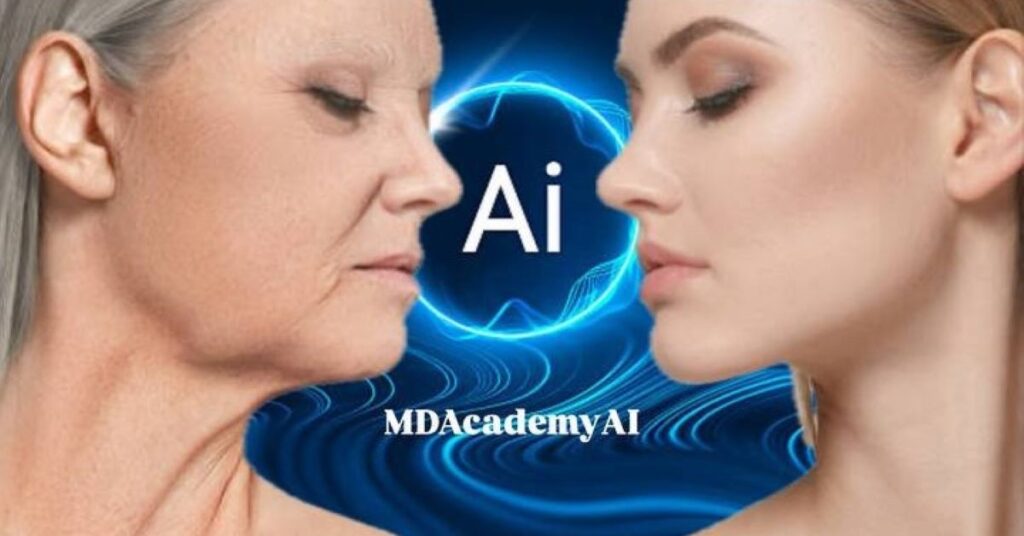
AI aesthetic medicine is transforming the way practitioners evaluate patients before any treatment. With advanced image analysis and predictive algorithms, AI can detect skin conditions, measure facial asymmetry, analyze texture, pigmentation, elasticity, and even forecast how a patient may respond to different treatment options.
These systems help practitioners create more accurate and personalized treatment plans. Instead of relying solely on visual judgment, clinicians can use data-driven insights to understand underlying issues that are not always visible to the human eye. This not only improves safety but also enhances patient satisfaction, as results become more predictable and tailored to each individual.
The Golden Ratio in Classical Beauty
The Golden Ratio (1.618) is a fascinating number repeatedly found in nature, art, and architecture. Leonardo da Vinci famously applied this ratio in his drawings and paintings to illustrate the human face and body.
For decades, aesthetic medicine also used this principle to design facial features, nasal shapes, and lip proportions. The belief was simple: the closer the face is to this ratio, the more beautiful it appears.
Geometry of Beauty in Modern Aesthetics
In modern practice, physicians rely on digital tools, facial analysis software, and 3D modeling to evaluate proportions.
Beauty masks, based on geometric guidelines, allow practitioners to analyze facial harmony before any injection or surgery. Geometry remains at the core of aesthetics, but with advanced and evidence-based methods.
From Universal Standards to Individual Harmony
Despite the importance of mathematical proportions, patients today increasingly seek natural and personalized results.
Instead of striving for one “perfect” face, the modern concept of beauty emphasizes uniqueness and personal identity. True beauty lies in enhancing the best version of oneself, not in conforming to a universal model.
Technology and the Future of Beauty Geometry
Emerging technologies like artificial intelligence and 3D simulation are reshaping the way beauty is defined.
AI can predict outcomes, simulate treatment options, and guide practitioners toward more precise and individualized results. This fusion of mathematics, technology, and the art of medicine defines the new frontier of beauty.
Conclusion
Beauty today is no longer defined by a single mathematical formula. Instead, it is a balance of classical proportions, natural harmony, and cutting-edge technologies.
The mission of modern aesthetic medicine is to create harmony and sustainability for each individual—not to replicate one universal ideal.
Learn more about our AI-based Facial Rejuvenation Services on our website.
According to a study by the American Society for Aesthetic Plastic Surgery, AI has enhanced accuracy and safety. Source. (https://www.surgery.org/)
Author: Dr. Seyed Ahmad Mohammadi
Founder of MDAcademyAI
Pioneer in Artificial Intelligence for Aesthetic Medicine
Educator, Researcher & Clinical Innovation Leader